
Since 2019, Clifford Chance has stood behind SURF through its Cornerstone Initiative, a remarkable six-year commitment that has touched the lives of tens of thousands of genocide survivors and their families across Rwanda. As the initiative has concluded, we want to take this opportunity to look back on what their funding has achieved, and to say an enormous thank you to everyone at Clifford Chance who made this work possible.
The Counselling Extension Response Project (CERP), running from April 2020 to December 2025, delivered vital mental health support to survivors through a free, confidential telephone counselling service, evolving over four phases as the needs of survivors changed – from an emergency COVID-19 response through to a long-term transition into Rwanda’s mainstream health system. In total, this project delivered direct support to 56,387 people.
Each year, from 7 April to 16 July, Rwanda commemorates the genocide against the Tutsi through a season of remembrance. In 2020, none of this was possible: COVID-19 lockdowns meant survivors could not gather, visit memorial sites, or find comfort in each other’s company at the moment they needed it most, just as roadblocks, curfews and repatriation flights revived painful memories of 1994.
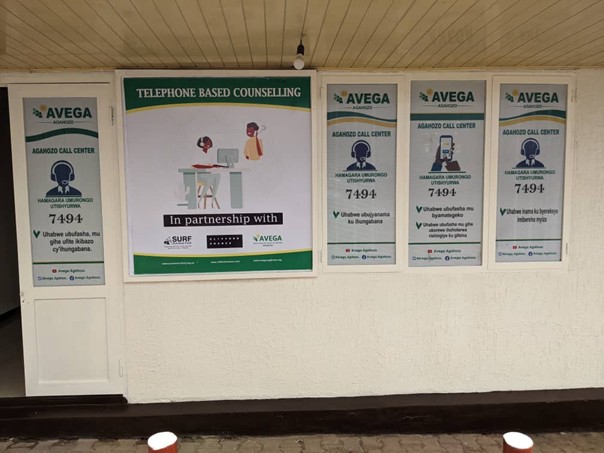
In response, SURF launched what became a five-year programme of telephone-based counselling, delivered confidentially and free of charge to anyone who needed it. Three toll-free helplines were established, staffed by professional counsellors and supported by 48 trained volunteer peer counsellors. Over four phases between April 2020 and December 2025 – including the Counselling Enhanced Reach Project (CERP) – the programme grew from an emergency COVID-19 response into a long-term counselling service delivered in partnership with survivor organisations including AVEGA, GAERG, AERG and IBUKA, before evolving again to help transition survivors into Rwanda’s mainstream mental health system as government-dedicated services came to an end.
For M.P., a 46-year-old mother in Rwanda’s Eastern Province who had lived for thirty years without ever accessing support for the trauma of the genocide, the helpline was transformative. After building trust with a counsellor over many calls, she was able, for the first time, to speak openly about her experience and begin to heal a relationship with her husband that had been strained for years.
“I used to feel useless, having back pain and stomach aches, but now I am a new creation… today we are a very happy family, and with all my children and husband, we are now looking forward to a bright future together.” M.P., project participant
By its conclusion, the project had delivered direct support to 56,387 people, reduced stigma around mental health, and left behind a network of trained Community Health Officers and Workers equipped to carry this support forward within Rwanda’s own health system.
You can read the full report here.
And view a short film on the project here.