
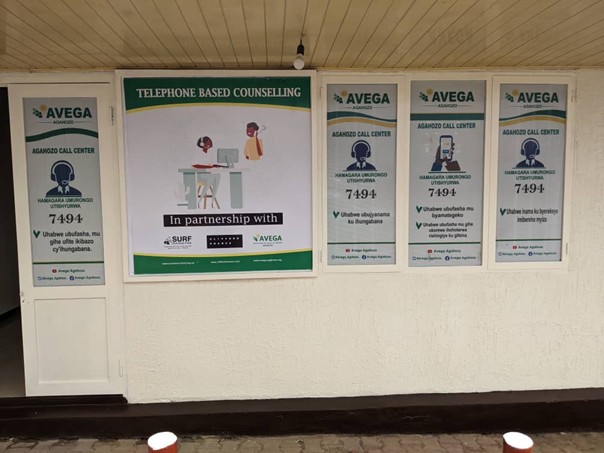
Continuing our series of articles from our Annual Report 2025/26, we outline here our work on our Counselling Embedding Systems Project (CERP IV).
CERP IV is a one-year follow on project to our Counselling Enhanced Reach Project (CERP III). The primary focus was to strengthen Rwanda’s public health system by training and sensitising Community Health Officers (CHOs) and Community Health Workers (CHWs) nationwide. The aim was to ensure that awareness of the specific mental health needs of genocide survivors – and appropriate, sensitive pathways for treatment and referral – is embedded within mainstream community health provision.
Training CHOs equips them with the skills required to coordinate CHWs across districts, deepen their understanding of the mental health challenges faced by genocide survivors, and work effectively with mental health professionals, including psychologists based at local health centres. Through this approach, CHOs are better able to guide CHWs, who serve as frontline volunteers within their communities, to identify survivors experiencing mental health difficulties and to support timely and appropriate referrals to health facilities when needed.
CERP IV builds directly on the success of earlier phases of the project – most notably the Counselling Extension Response Project (CERP III) – which focused on sustaining phone-based and peer-support counselling services for genocide survivors, their dependants, and other vulnerable individuals nationwide. By shifting the emphasis towards embedding skills and awareness within the public health system, CERP IV has achieved its intended objectives within its lifespan and strengthened the sustainability of counselling support beyond project funding.
The direct beneficiaries of CERP IV are members of partner organisations supporting genocide survivors, including AVEGA (National Association of Widows of the Genocide), GAERG (National Association of Graduate Survivors), AERG (National Students’ Association of Genocide Survivors), and IBUKA (the national umbrella organisation of survivors’ associations). In addition, the project benefits survivors more broadly by increasing community-level capacity to recognise mental health needs and respond appropriately.
As originally envisaged in the project design, CERP IV sought to support all categories of genocide survivors and related vulnerable individuals experiencing mental health challenges by raising awareness and improving access to mental health support. Through training delivered to CHOs across multiple districts, the project has increased professional knowledge and practical skills within the health system, enabling CHWs to better understand their role in supporting both younger and older survivors within their communities.
At the outset of CERP IV, the project aimed to train more than 200 CHOs nationwide and to indirectly educate approximately 1,500 CHWs through cascade training. This approach has contributed to improved identification of mental health needs, clearer referral pathways, and increased access to psychosocial support, resulting in measurable improvements in wellbeing among genocide survivors and their communities.
While the primary focus of CERP IV was to train CHOs and raise awareness among CHWs, the national counselling helplines established in the earlier phases of CERP remained fully operational throughout the project. Professional counsellors and trained Peer Support Counsellors (PSCs) continued to provide phone-based counselling to genocide survivors and related persons across the country, ensuring continuity of care alongside the system-strengthening work.
There were 10,337 calls to the helpline over the period of the project and as a result, 8,438 individuals benefited, including 4,208 unique callers who were able to access phone-based counselling, and 1,466 new non-helpline callers who received support. 419 CHOs received training, in addition to 96 new PSCs, who were trained in basic mental health awareness and in providing psychosocial support to individuals experiencing mental health challenges. A further 20 psychologists based in health centres received specialist training on supporting genocide survivors, recognising their needs as a distinct and vulnerable group requiring sensitive and appropriate care.
Partner organisations involved in the project – AVEGA, GAERG, AERG and IBUKA – have strengthened their capacity to support their members through increased resources, training, and professional supervision. Counsellors within these organisations have improved their knowledge, skills, and confidence in delivering effective counselling support. Just as importantly, the supervision structures established through the project have enabled counsellors to share learning, manage the emotional demands of their work, and strengthen their own resilience, helping to sustain high-quality support for survivors over time.
PSCs have continued to play a vital role in reaching survivors within their communities. During the project period, PSCs made 3,573 call-outs to helpline callers nationwide. An endline survey was conducted with 397 beneficiaries to assess their experiences and perceptions of the programme. The findings demonstrate a clear positive change in wellbeing:
- 99% reported that the counselling support helped address the issues they were facing.
- 98% reported that the support made accessible through the helpline was effective
- 97% reported feeling more hopeful and confident about the future since accessing counselling.
- 97% reported improved ability to manage daily stress and feeling better than before.
- 96% reported feeling emotionally supported and cared for.
- 94% reported improvements in sleep and feeling more rested.
- 95% reported improved coping with difficult emotions.
- 95% reported experiencing joy or peace more frequently as a result of the support received.
- 98% reported that phone-based counselling was available when they needed support.
Qualitative feedback gathered through focus group discussions further highlights the impact of the project. Beneficiaries reported that phone-based counselling enabled them to re-engage with aspects of community life that had previously felt overwhelming. For some survivors, this included attending genocide commemoration events for the first time in over 30 years.
Training delivered to 419 CHOs has also led to meaningful change at community level. Through the cascade of that training, 2,109 CHWs are now better equipped to identify genocide survivors experiencing mental health challenges and to work with health centres to ensure appropriate referrals. Previously, the specific mental health needs of genocide survivors were not consistently recognised or addressed within mainstream services. By the end of the project, health centres demonstrated increased awareness and readiness to receive and support survivors referred for mental health care.
CHOs, in partnership with CHWs, have also undertaken outreach and awareness-raising activities within communities, including during community work programmes, family evenings, and other local events organised by authorities. This has improved awareness of available mental health services and reduced barriers to seeking support.
Finally, the project has contributed to longer-term sustainability. AVEGA has secured additional funding to deploy counsellors at district level to oversee and support genocide survivors experiencing mental health challenges. This funding decision was informed by data generated through the helpline and project monitoring, demonstrating the value of the services provided and ensuring continued access to psychosocial support beyond the life of CERP IV.
MC, Genocide Survivor *
“I thank God for the support I received through telephone counselling. I was close to death because of my mental health challenges. I am the only survivor of the genocide against the Tutsi in my family, and I was just ten years old at the time. After the genocide, I was raised in different families and in an orphanage. I struggled at school and eventually dropped out. I believed my problems were caused by poisoning from neighbours, because I did not understand mental health.
“After my husband left me with three children, I felt completely hopeless. Suicide felt like the only option. One day someone came to my home with a small piece of paper showing a toll-free number. I thought it was financial support. When I called, I spoke to a woman with a kind voice. Over time, we had around 20 counselling sessions.
Today, my life has changed completely. I am running a small business selling crops at my local market. I love my children and they are doing well. I no longer cry every day. Even though I have never met my counsellor in person, she helped rebuild my life. I wish this service could continue forever, because many genocide survivors are still living with deep trauma even after 31 years.”
KE, Professional Counsellor *
“Personally, it was my first time to work as a counsellor providing phone-based counselling support. At the beginning, we did not believe it would be possible, but through the training delivered at the start of the project and ongoing quarterly refresher sessions, we came to realise how beneficial telephone-based mental health support can be – especially for people living in remote areas or those with low incomes who cannot afford transport to meet counsellors in person.
This project was innovative and very much needed. We supported many genocide survivors, as well as non-survivors who learned about the service through radio broadcasts and community meetings. I remember one case in particular where I spent over five hours supporting someone who had attempted suicide due to trauma linked to family conflict. It was a very difficult case to manage remotely, but it confirmed for me how essential this service is. I strongly hope it continues for many years.”